


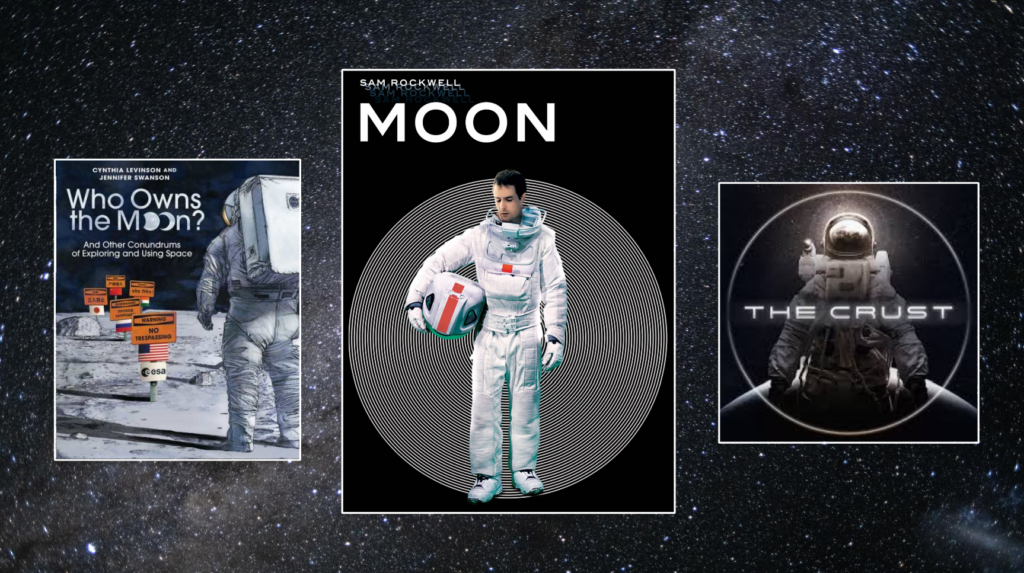
Hello, and welcome to another space deep dive! Each week I focus on a new topic and find something you can watch, read, and play to learn more. This week is how to make money on the Moon, and no, it doesn’t involve selling Moon cheese.
For being an unassuming grey object, the Moon actually has a lot of valuable resources. Top among them is Helium-3, where 1 pound of the stuff can fetch around 9 million dollars. There’s ice, which can be turned into water or rocket fuel, which is cheaper to mine than to bring along on a rocket from Earth. Lunar regolith (dirt) has resources such as iron, aluminum, and silicon. Last but not least, the Moon has 10,000x more rare earth metals than Earth, which are valuable in the creation of electronics. But let’s swing back to Helium-3, which a company in the movie Moon is mining.
Moon 📺
Sony Pictures
Rated: R
Runtime: 1 hours and 37 minutes

The premise of the movie Moon is that’s there a company called Lunar Industries Ltd that mines Helium-3 (He-3) off the surface of the Moon. I mentioned in the introduction that Helium-3 is currently worth about 9 million dollars per pound of material. Why is this? Well, Helium-3 is extremely rare on Earth and does not naturally occur except for small amounts in the atmosphere or from the decay of Tritium (which is also a rare material). As to why Helium-3 is coveted, it can be used to power fusion reactors and to cool quantum computers. This movie has He-3 being used to meet 70% of the world’s energy needs through fusion. But how does this happen, and why does the Moon have so much of the stuff?
Fusion reactors work by combining Helium-3 with Deuterium, which releases massive amounts of energy. Not only is the energy output plentiful, but it’s also clean and nonradioactive, making it sought as the clean energy of the future instead of nuclear reactors. He-3 is released from the sun and carried along by solar winds. Since the Moon has no atmosphere, He-3 impacts the surface of the Moon and just stays there. This is why the movie Moon has harvesters rolling along the surface with giant rake-like objects to pick up the soil and sift for He-3. Once a few pounds of the material is collected, the individual that’s manning the mining outpost loads it up into a small rocket and shoots it off back to Earth. The movie involves complex themes as the operator discovers what lengths the company would go to make money. Are there any laws to prevent exploitation of individuals on the Moon, or even about Moon resources in general? Who Owns the Moon? answers these questions.
You can find this movie at your local library, Disney+, or Hulu.
Who Owns the Moon? 📖
Cynthia Levinson and Jennifer Swanson
Estimated Readtime: 3 to 4 hours
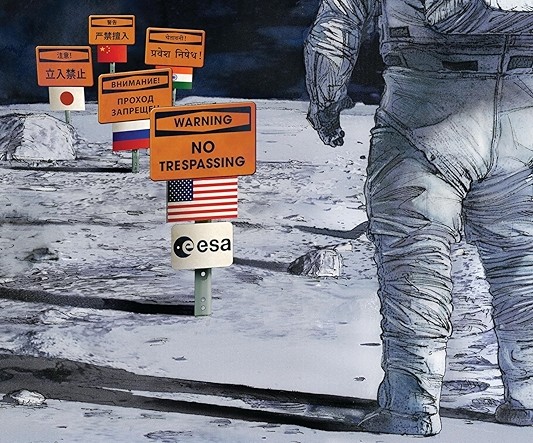
Who owns the Moon? No one. According to Article II of the Outer Space Treaty,
Outer space, including the moon and other celestial bodies, is not subject to national appropriation by claim of sovereignty by means of use or occupation, or by any other means.
This means that no one owns the Moon, nor can claim any land on the Moon. This makes business a little tricky. If you place a mining outpost on the lunar surface, how do you prevent someone from coming and taking the resources you’ve just dug up? Here’s where the Artemis Accords come into play. Created in 2020 and signed by over 40 countries, these are guidelines for how countries should behave in space (but aren’t laws). Principle #8 covers space resources and states “The utilization of space resources should be done in a manner that complies with the Outer Space Treaty, can benefit humankind and is critical to sustainable operations.” In other words, whatever you mine is yours, as long as it benefits mankind and you’re not destroying the Moon to do so.
Who Owns the Moon? delves into this and other legal snafus such as sabotage, conflict, saving someone in distress, and claiming lunar sites. It also describes how we’ve already had experience working with other countries in complex ways, as with the international space station and the rules governing it. The book also highlights that there’s lots of situations that just don’t have laws to cover them yet, and probably won’t until that specific circumstance pops up. When humans go back to the moon to stay, and companies start doing business there, there’ll be a new boom for space lawyers. The Crust is a game that puts you into the shoes of one such company making money on the Moon.
You can find this book at your local library or bookstore
The Crust 🎮
Veom Studio
Rated: Everyone
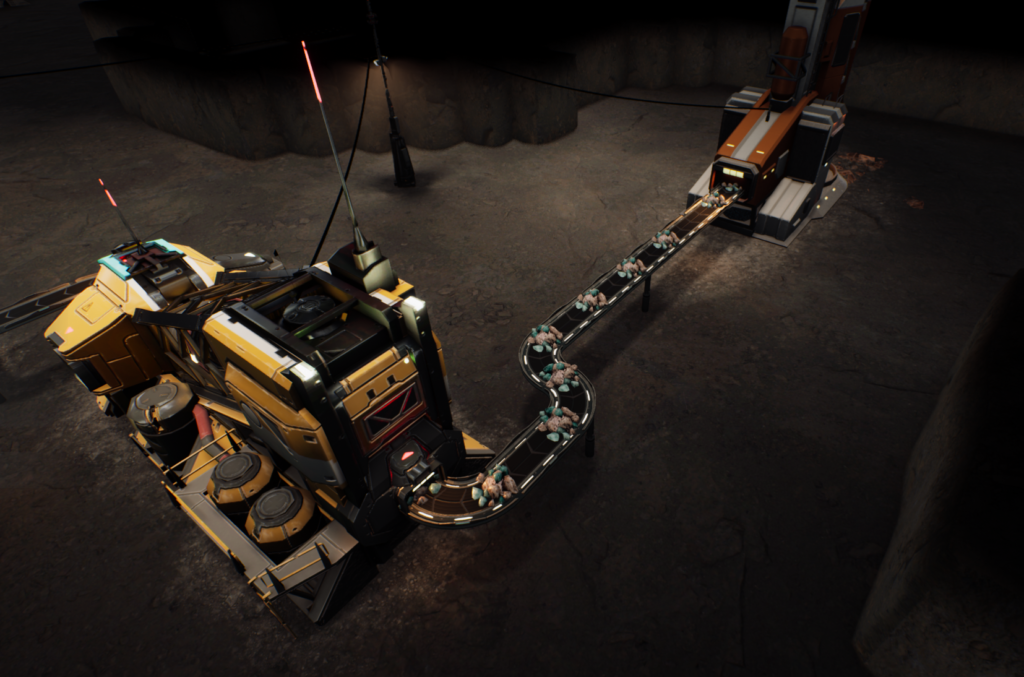
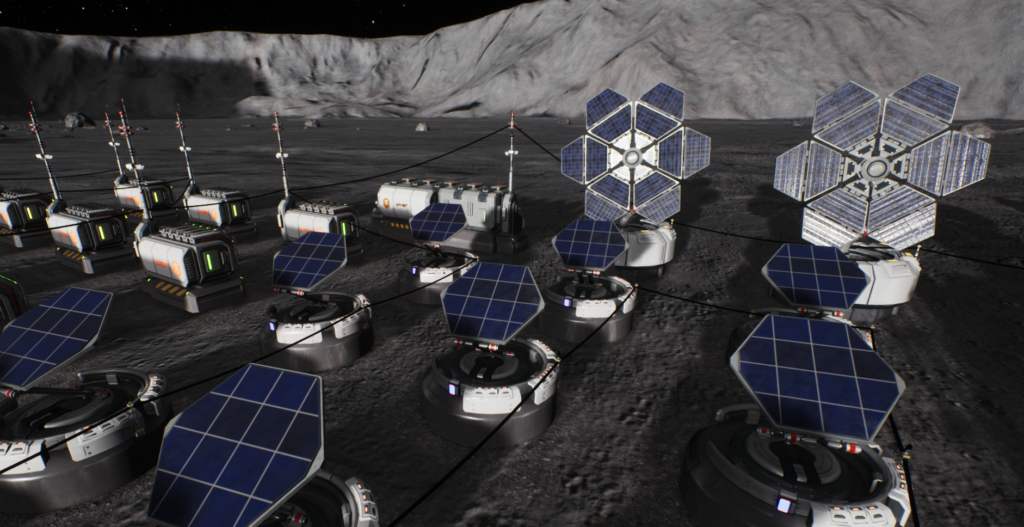
Have you ever wanted to run a mining operation on the Moon, shortly after a massive asteroid takes out most of your fellow lunar competition? Then The Crust is the game for you! There are two main modes you switch between, the lunar surface and underground. On the surface is where you build your power generation facilities, think solar panels, reactors, and batteries. Underground is where the money-making happens. You can mine deposits of Titanium, Iron, Silicon, Aluminum, Regolith, Rare Earth Elements, and Ice. Regolith can be found all throughout the soil of the map, and can be processed for Oxides which can be smelted into metals and turned into other products such as electronics and components. This is very much a conveyor belt game, where you can create a production line from mining lunar regolith to building more advanced products.
However, there’s an interesting twist. A day on the Moon last about 14 Earth days. This means that your mining operation will be in the dark also for 14 Earth days. Not only do you have to generate enough power to run the operation during the daylight, you have to create extra to store for when there’s no sunlight to power your solar panels. I really appreciated this nod to realism, and it definitely grounds the experience.
Pro Game Tip: Build lots of solar panels and batteries, more than you need! It’s better to have more power than necessary, than to have your operations come to a halt for 7 days and wait for the sun to appear again (this happened to me).
While lunar legal conundrums and Moon mining may seem like science fiction, they’re closer to reality than one would expect. Artemis IV is slated to land humans on the Moon in 2028, and the goal is to eventually build a base there to stay. With a constant presence on the Moon, more investment and companies will possibly follow. Making money from the Moon may no longer seem so outlandish.
Next week’s deep dive will be covering the Andromeda Galaxy. Until then, keep looking up!


Leave a Reply